

"A distributed control system (DCS) is a computerized control system for a process or plant, usually with many control loops, in which autonomous controllers are distributed throughout the system, but there is no central operator supervisory control."
While the function of a DCS is similar to that of PLCs, a DCS is commonly found as a solution for continuous manufacturing and also offers built-in visualization capabilities similar to those of SCADA systems.
Monitoring a DCS with Paessler PRTG
To understand how PRTG can be used to monitor a DCS, it first helps to understand the typical architecture; for that, we return to the industrial automation pyramid:
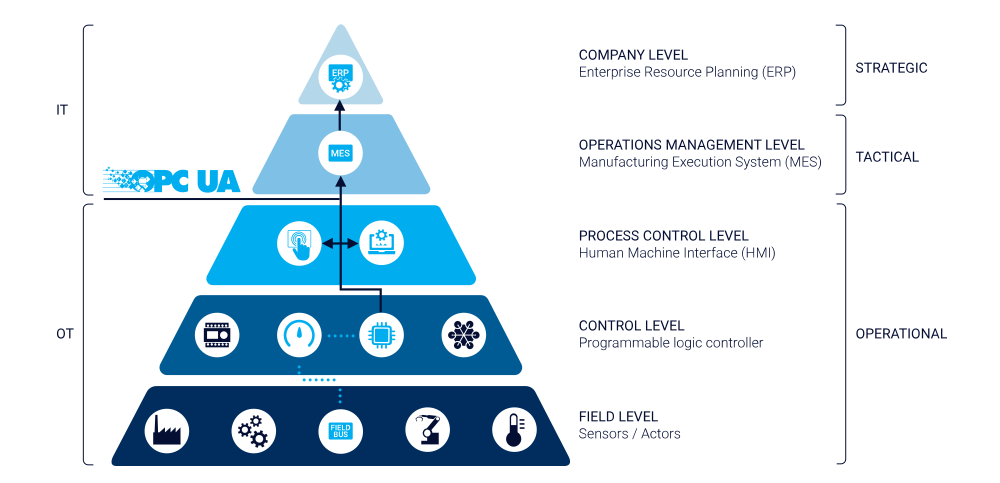
Typical DCS configurations include operator stations, servers (to collect and store operational data), and controllers. These operate at the operational tier of the pyramid, specifically at the control and process control levels. PRTG can be used at those same levels.
PRTG as monitoring middleware
OPC UA and API connectivity allow PRTG to operate as a kind of middleware, since it can monitor the various components of a DCS and feed information back to the DCS itself. The underlying components of the environment include firewalls, switches, the backup infrastructure, PLCs, and more. PRTG obtains information from them via OPC UA, SNMP, REST API, and other methods; that data forms the basis of monitoring, watching for values that exceed defined thresholds and other signs of trouble, and displaying them on health and status dashboards.
Alternatively, the DCS can access the data in PRTG using its API, or PRTG can generate an email for the DCS. When PRTG detects problems, it can also send notifications to the DCS — for example by writing an OPC UA tag if the DCS servers run OPC UA.
PRTG as an offline option
This matters especially given that companies may choose a DCS for its more robust security: the fact that PRTG can be used "offline," with no need to be connected to the outside world, makes it an attractive option for monitoring isolated infrastructure.
PRTG at a wastewater treatment plant
SE3 (Sistemas Eléctricos y Electrónicos Especializados) is a Mexican consulting firm providing industrial maintenance and automation services. They use PRTG for remote monitoring of wastewater treatment plants. In one of their projects in Yucatán they were able to monitor crucial data such as tank levels, energy consumption, and the status of water pumps and other actuators.
How they obtained that data is interesting: control system data is collected by INSYS gateways, which convert industrial protocols into more common ones. In this case MQTT was used as the transmission protocol, and PRTG was able to use its MQTT functionality to bring in the data.