
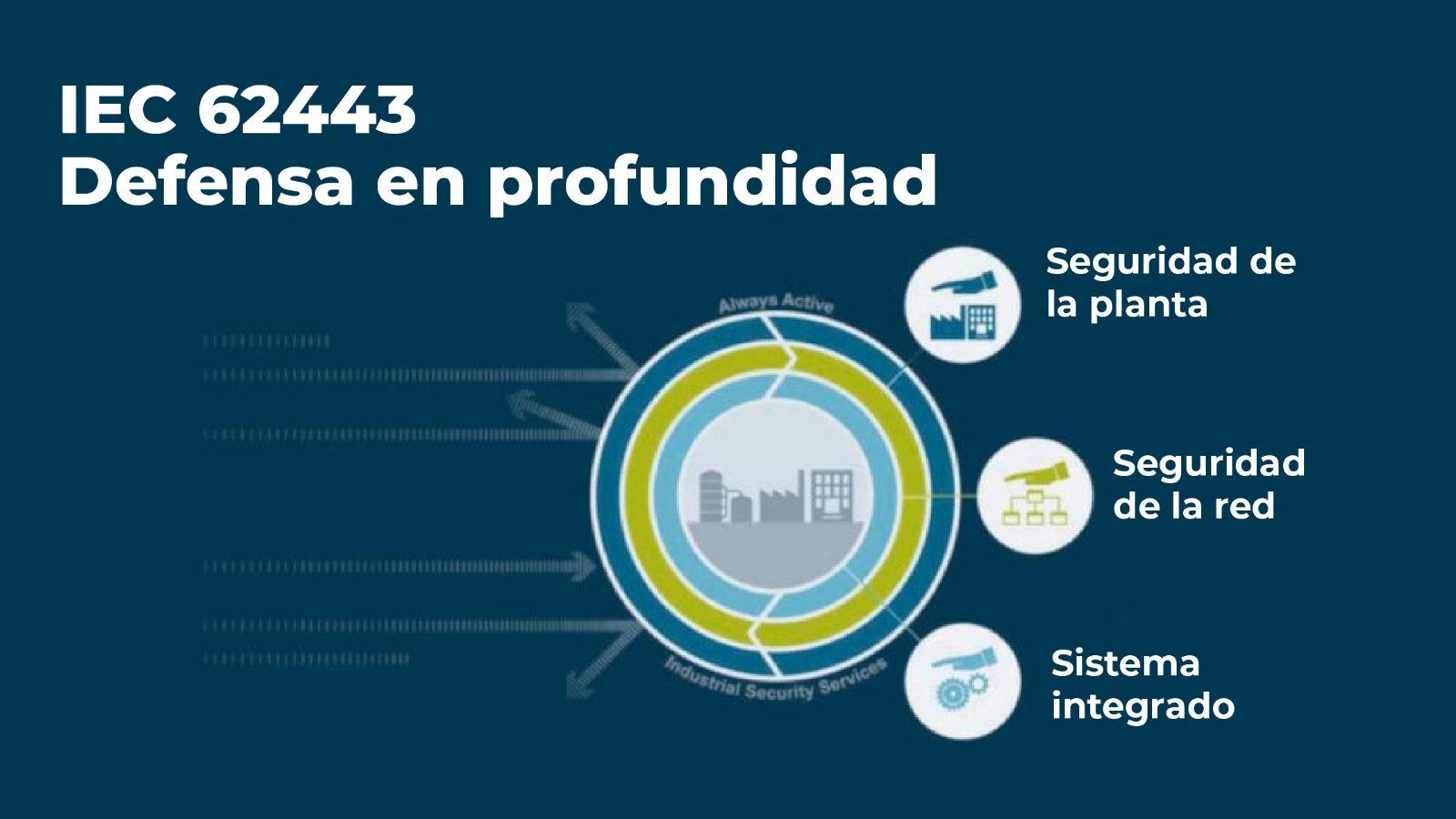
In an increasingly interconnected world, cybersecurity has become crucial to keeping industries and companies running correctly. In that context, the IEC 62443 standard has emerged as the reference for implementing security measures in industrial control systems.
What is industrial cybersecurity?
Industrial cybersecurity refers to the protection of systems, networks, and data in industrial environments. Industrial control systems (ICS) are fundamental to the operation of critical infrastructure such as power plants, factories, and transportation networks. Given their importance, any disruption caused by a cyberattack could have catastrophic consequences.
Why IEC 62443 matters
IEC 62443 is a set of standards designed to provide a framework for cybersecurity in industrial control systems. It is relevant because it offers guidance for identifying and reducing the risks associated with this type of system.
Applying IEC 62443
Applying it means adopting a series of measures and processes to protect industrial control systems:
Risk analysis
The first step is a detailed analysis of the risks and vulnerabilities the system is exposed to: identifying critical assets, threats, and vulnerabilities that could be exploited.
Implementing security controls
The standard details controls that may be technical (firewalls, intrusion detection systems), organizational (security policies, employee training), or physical (access control to facilities).
Continuous monitoring
Once controls are in place, constant monitoring is needed to detect suspicious activity: reviewing logs and alerts, and carrying out regular security audits.
Incident management
The standard establishes a framework for identifying, responding to, and recovering from incidents, as well as learning and improving continuously from them.
Conclusion
Guaranteeing the cybersecurity of industrial control systems is essential. IEC 62443 offers a solid framework for identifying risks, implementing measures, and managing incidents. It is not a one-time process but a constant effort of improvement and adaptation to new threats. Implementing it is an important step toward a safer future.